
A dental bridge replaces one or more missing teeth by joining a replacement tooth to the teeth on each side of the gap. Unlike a removable partial denture, a traditional bridge is cemented in place, so there’s nothing to take out at night.
At McDougall DDS in Midtown Tulsa, Dr. McDougall and Dr. Reed can help you decide whether a porcelain bridge, a dental implant or a partial denture is the best fit for your missing tooth. That choice depends on the health of the neighboring teeth, your overall oral health, your budget and what you want from treatment.
Why Replace a Missing Tooth?
A missing tooth may not hurt, especially one near the back of your mouth. Even so, an empty space can affect your bite and the teeth around it.
Over time, the teeth next to the gap may tilt or drift into it, and the tooth above or below can move out of place. Not everyone sees this happen, but when it does, it can change how your teeth fit together and make some spots harder to keep clean.
The jawbone where the tooth used to be can also shrink, because there is no root there to keep it stimulated. That can limit your options later, including whether you would need a bone graft before an implant.
Replacing the tooth can help you chew comfortably and keep your bite better balanced. Your dentist can examine the area and tell you whether replacing it is a good idea.

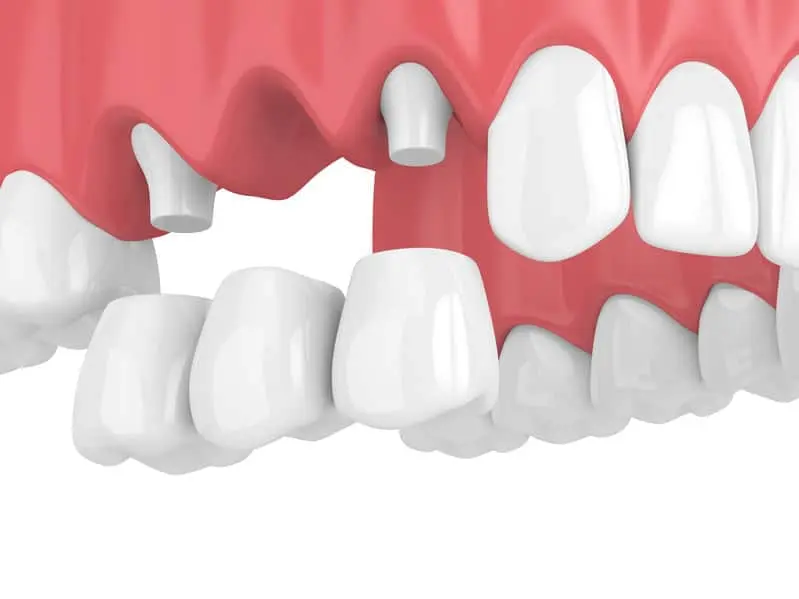
How a Dental Bridge Works
A traditional bridge depends on the teeth on both sides of the gap for support. Those teeth are prepared for crowns, and the crowns are joined to a replacement tooth called a pontic.
The bridge is made in one piece and cemented in place. Once it’s in, it works as a fixed replacement for the missing tooth, and the porcelain is shaded to blend in with your natural teeth.
The supporting teeth need to be healthy and strong enough to carry the extra load. Your dentist will check those teeth, the size of the space and your bite to see whether a traditional bridge is a good choice.
Bridge, Implant or Partial Denture: Which Fits?
There’s more than one way to replace a missing tooth, and every option has pros and cons.
Dental Bridge
A bridge can be a smart choice when the teeth next to the gap already need crowns, or when an implant isn’t a good match. It stays in place and doesn’t involve implant surgery.
The trade-off is that the supporting teeth usually have to be reshaped to hold the bridge, even if they were healthy before.
Dental Implant
An implant replaces the root of the missing tooth and holds a crown without relying on the teeth beside it. It may help protect the bone in that area, but it requires surgery and a healing period that can last several months. Some people also need extra steps, such as a bone graft.
An implant is worth a look when the neighboring teeth are healthy, though whether it’s right for you depends on your situation.
Read more on our dental implants page.
Removable Partial Denture
A partial denture replaces one or more missing teeth with an appliance you can take out. It usually doesn’t require reshaping the nearby teeth the way a bridge does, and it often costs less at the start.
On the other hand, it comes out for cleaning, and it may feel different from a fixed tooth when you eat or talk.
Visit our dentures page to learn more.
The right choice is different for everyone. We’ll go through the options for your gap, including the benefits, the limits and the costs, before you decide.
Getting a Bridge: What to Expect
A traditional bridge usually takes two visits, because a dental laboratory makes the final bridge.
First Visit
The supporting teeth are numbed and shaped for their crowns. Your dentist then records the area with our iTero digital scanner (no goopy impression trays) and picks a shade that blends with your natural teeth. If dental visits make you nervous, tell us. We’ll explain each step first, and nitrous oxide is available if it would help.
A temporary bridge may be placed to protect the prepared teeth while your permanent bridge is being made.
Second Visit
When your bridge is ready, your dentist checks the fit, how the replacement tooth sits against the gum, the color, and how your bite comes together.
Any adjustments are made before the bridge is cemented. Our team will also show you how to clean under the replacement tooth and look after the teeth that hold it up.
Cleaning and Caring for Your Bridge
Cleaning under a bridge matters a lot, since food and plaque can gather around the replacement tooth and along the gumline.
Because a bridge is one connected piece, you can’t floss between its joined teeth the normal way. A floss threader, bridge floss or a small interdental brush can help you clean underneath the replacement tooth.
Our hygienists can show you the method that works best for your bridge.
Good daily care helps protect the gums and supporting teeth from decay and inflammation. Keep brushing twice a day, clean under the bridge the way we showed you, and come in for regular checkups. Call us if the bridge feels loose or uncomfortable, or if the gums around it become swollen or bleed.
How long a bridge lasts depends on the health of the supporting teeth, your bite, the materials used and how well you care for the area.
Talk About Your Tooth Replacement Options in Tulsa
If you’re missing a tooth, you don’t need to have a treatment picked out before you come in. Dr. McDougall or Dr. Reed can examine the area, explain your options, and help you compare a bridge, an implant and a partial denture side by side.