A dental implant replaces the root of a missing tooth with a small post, usually made of titanium, set into the jawbone. As the area heals, the bone fuses to the implant and gives the new tooth a firm foundation. A crown is then attached to replace the part of the tooth you see.
At McDougall DDS in Midtown Tulsa, implants may be a good way to replace a single tooth, several teeth, or to help hold a denture in place. Dr. McDougall or Dr. Reed will look at your oral health, your jawbone and your goals before recommending a plan, and will explain every step before anything begins.
How Do Implants Compare?
A bridge and a removable denture can both fill a gap, but each one works differently from an implant.
A traditional bridge is held up by the teeth on both sides of the gap, which usually have to be reshaped to support it. A removable denture rests on the gums and may shift when you eat or talk. An implant is anchored in the jawbone and holds its replacement tooth on its own, with no help from the teeth beside it.
Implants may also help protect the bone where a tooth is missing. A natural root passes chewing pressure into the jaw, and an implant can do something similar. Some bone change can still happen, but an implant may help limit bone loss in that spot.

What to Expect With Implant Treatment
Implant treatment happens in stages, with healing time between some of them. For many people the whole process takes several months, depending on the bone and gums, whether extra procedures are needed, and how healing goes.
1. Exam and Planning
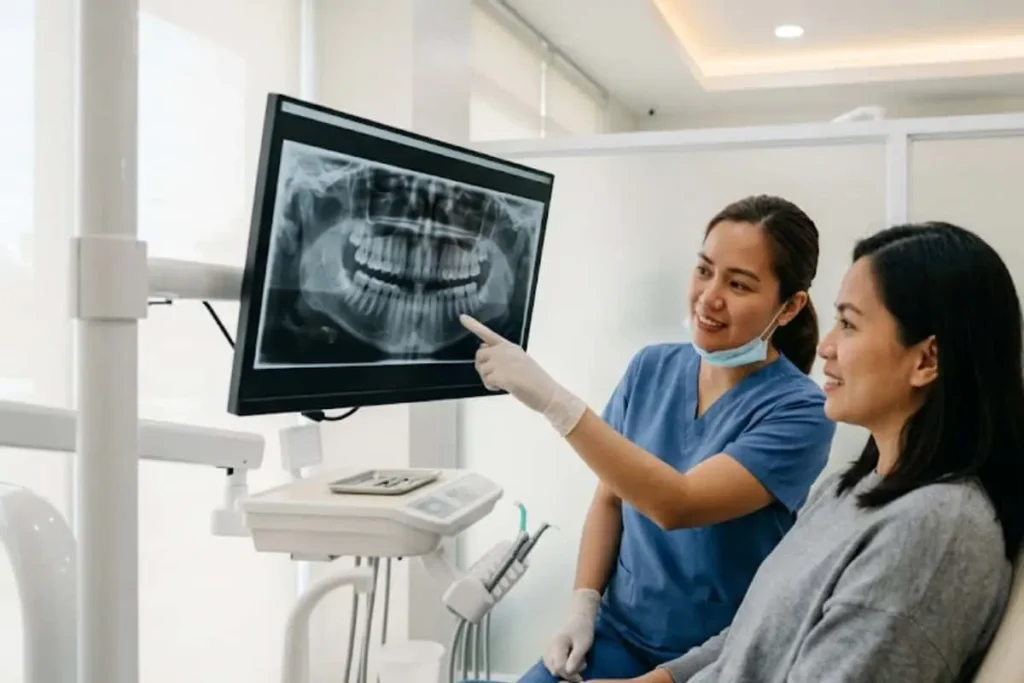
It starts with an exam and a review of your dental and medical history. Digital X-rays let your dentist check the bone, see the structures nearby and plan where an implant could go.
We’ll talk about the missing tooth, what you hope treatment will do, and other ways to replace it. This visit shows whether an implant makes sense for you and whether anything needs to happen first. Depending on your case, the surgical part may be done by Dr. McDougall or by an oral surgeon we refer you to.
2. Preparing the Area
Some people have enough healthy bone for an implant right away. Others need a bone graft to build up the area before an implant can go in.
A graft may be recommended when the jawbone has shrunk after an extraction or after a tooth has been missing for a while. If you need one, the area is given time to heal before the next step.
3. Placing the Implant and Healing
The implant is placed in the jawbone during a surgical procedure. Over the following months the bone grows around it and attaches to it, a process called osseointegration. That bond is what lets the implant support a new tooth.
Healing time is different for everyone. Your dental team will explain what to expect based on your own treatment plan.
4. Adding the New Tooth
Once the implant has healed, a small connector called an abutment may be attached. We then record the area, often with our iTero digital scanner instead of messy impression trays, so the crown or other restoration can be made to fit.
The final restoration is placed and adjusted until your bite feels right and you can chew comfortably. Your dentist will show you how to clean around it and keep the gums nearby healthy.

Implants for Several Missing Teeth
You don’t always need one implant for every missing tooth. In some cases a few implants can hold a bridge that replaces several teeth in a row.
Implants can also help replace most or all of the teeth in the upper or lower jaw. Depending on the plan, they may support a fixed bridge or help hold a removable denture in place.
If your denture slips or rocks, an implant-retained denture may feel steadier when you eat and talk. Whether it suits you depends on your bone, your oral health and the kind of denture you wear.
How many implants you need, and what type of restoration they support, depends on your own situation.
Learn more about your choices on our dentures page.
Are Dental Implants Right for You?
Many adults with missing teeth may be candidates for implants, but an exam is the only way to know for sure.
Several things affect implant treatment:
Bone: There needs to be enough bone to hold the implant, or you need to be a good candidate for a bone graft.
Gum health: Active gum disease should be treated before an implant is placed.
Overall health: Some health conditions and medications can affect healing, so we review them with you.
Smoking: Smoking raises the risk of problems and can slow healing.
Daily care: Keeping the implant and surrounding gums clean matters for years to come.
Diabetes doesn’t automatically rule out implants, but diabetes that isn’t well controlled can get in the way of healing. Bring a list of your medications, and your dentist will go over your history and anything that could affect treatment.
If an implant isn’t the best fit, there are other ways to replace missing teeth, such as a bridge or a partial denture. Our goal is a plan that suits your dental health and your life.
Taking Care of Your Implant
An implant can’t get a cavity, but the gums and bone around it still need care. Bacteria can inflame the tissue around an implant and, if ignored, can damage the bone that holds it.
To help protect your implant:
Brush twice a day and clean carefully around the implant.
Clean between your teeth and around the new tooth every day, using the method your hygienist shows you.
Keep up with regular checkups and professional cleanings.
Call us if you notice bleeding, swelling, soreness or any movement around the implant or its tooth.
Regular visits let our team keep an eye on the implant, the tissue around it and the replacement tooth. With good care, implants can last many years, though long-term results depend on factors that vary from person to person.
Schedule a Dental Implant Consultation in Tulsa
If you’re missing a tooth or your denture never feels secure, a consultation is a good first step. We’ll look at your situation, go over your options, and explain each step and its cost before you decide anything.
Ready to Schedule Your First Visit?
We're happy to welcome new patients to our office on South Harvard Avenue in Midtown Tulsa. If you have questions about your first visit, insurance or what to expect, give our front desk a call. Appointments in Spanish are available.
Request an appointment
Send this and the front desk will follow up to confirm a time and check your insurance before you arrive.